
In an era where sustainability is increasingly crucial for business operations, Life Cycle Assessment (LCA) has emerged as an indispensable tool for companies worldwide. LCA is a comprehensive analysis method that evaluates the environmental impacts of a product or service throughout its entire life cycle—from raw material procurement to final disposal.
Adopting the LCA approach offers numerous benefits for companies, including enhanced operational efficiency, reduced carbon footprint, and compliance with tightening sustainability regulations. More than just an obligation, LCA helps businesses better manage environmental risks and opens new opportunities in a market that increasingly favors sustainable business practices.
Market Demand for Life Cycle Assessment
Market demand for more environmentally friendly and transparent products has been rising steadily in recent years. Modern consumers are not only concerned with the quality of products but also with how these products are produced and their environmental impact. In a global survey conducted by Nielsen, more than 66% of consumers indicated they are willing to pay more for products from companies with a strong commitment to sustainability. This creates pressure on businesses to be more transparent about the environmental impact of every stage of their product life cycle. Life Cycle Assessment (LCA) has become a critical tool for meeting these market demands.
Many companies, especially in the Fast-Moving Consumer Goods (FMCG) and manufacturing sectors, are beginning to use LCA to address the growing consumer demand for sustainability in products. By adopting LCA, businesses can provide clear information to consumers about the environmental impact of the products they purchase, such as carbon footprints, water usage, and waste management. For example, a company that produces food products can use LCA to provide labels on packaging that display the carbon emissions generated from the production and transportation processes. Environmentally conscious consumers tend to favor products with a lower environmental impact, and LCA provides convincing data to support such claims.
It's not just consumers—regulators and other stakeholders, such as investors and financial institutions, are also increasingly demanding that companies demonstrate their environmental risk management. In Indonesia, The regulation P.75/MENLHK/SETJEN/KUM.1/10/2019 sets a roadmap for producers to reduce waste by 30% by 2029, focusing on sustainable packaging materials. From an LCA perspective, it requires producers to use recyclable, reusable, or easily decomposable materials, minimize waste through restriction, recycling, and reuse, and continuously monitor and report their waste reduction efforts throughout the product lifecycle. LCA becomes crucial in helping businesses comply with such regulations while simultaneously boosting their competitiveness in a market that increasingly prioritizes sustainability.
In the Business-to-Business (B2B) sector, the need for LCA is also on the rise. Many large companies are now requiring their partners or suppliers to demonstrate their commitment to sustainability. Implementing LCA enables businesses to objectively measure and manage the environmental impacts of their supply chains, ensuring that they work with suppliers aligned with sustainability goals. In the long term, this can help companies strengthen their market position and attract higher-quality business partners.
Examples of LCA Implementation by Companies and Those Already Practiced by Other Companies
A company that produces plastic packaging can apply Life Cycle Assessment (LCA) to evaluate the environmental impacts of its production processes. This process begins by assessing the life cycle of plastic packaging, from the extraction of raw materials such as polyethylene, the manufacturing of the packaging in the factory, distribution to consumers, and disposal after use. The LCA can identify high energy usage during manufacturing or greenhouse gas emissions during transportation. Based on the LCA results, the company can decide to use recycled raw materials or improve the production process to reduce its carbon footprint.
Additionally, the company could conduct an LCA on alternative products, such as packaging made from organic materials, which may have a more environmentally friendly life cycle. In this way, LCA helps the company make strategic decisions that not only positively impact the environment but also create added value in the eyes of consumers.
A real-life example of LCA implementation is seen in the electronics industry, such as with smartphones. Large companies like Apple have applied LCA to assess the environmental impact of their products' life cycles, from the extraction of rare metals used in the devices to the recycling process after the devices are no longer in use. Apple uses LCA results to reduce the use of harmful materials, improve energy efficiency in manufacturing, and enhance recycling practices to minimize electronic waste. In 2020, Apple announced that it had switched to using recycled aluminum for the iPhone’s frame to reduce the carbon footprint from raw material extraction.
Another example is in the transportation sector. Many car manufacturers, such as Toyota, have used LCA to assess the environmental impact of their vehicles, particularly in hybrid models like the Toyota Prius. Through LCA analysis, Toyota can identify the impact of fossil fuel use during the vehicle's lifespan and choose to develop more energy-efficient and eco-friendly technologies. This LCA application allows Toyota not only to produce more efficient vehicles but also to communicate their commitment to sustainability to consumers.
Two Classification Methods in Conducting LCA
In the application of Life Cycle Assessment (LCA), there are two main classifications for declaring the environmental analysis results of a product or service: Self Declare and Environmental Product Declaration (EPD) Declare. These two methods have different approaches in terms of how information is communicated to the public, yet both serve the purpose of increasing a company's environmental transparency. The choice between Self Declare and EPD Declare depends on the company's goals, regulatory policies, and market demands.
1. Self Declare: Independent Transparency
Self Declare is a method where companies independently declare the environmental impact of their products based on the LCA results they have conducted. In this approach, the company is responsible for conducting and compiling the LCA analysis internally without the need for external verification. The results of Self Declare are usually published by the company itself, either in the form of product labels or sustainability reports. Self Declare typically involves the following stages:
The main advantage of Self Declare is its flexibility and lower cost, as it does not require third-party certification. However, the challenge with this approach is that consumer and regulatory trust may be lower due to the absence of independent verification. Companies need to build a good reputation and maintain high transparency to have their claims recognized by the market.
2. EPD Declare: Product Declaration with Independent Verification
Environmental Product Declaration (EPD) Declare is a more formal and verified method of declaring LCA results. EPD is a standardized document prepared based on LCA results and verified by an independent third party. The purpose of EPD is to provide objective, transparent, and comparable information about the environmental impact of a product. Unlike Self Declare, the EPD Declare method involves more structured and rigorous steps:
EPD Declare offers a higher level of trust since the LCA results are verified by third parties. This provides assurance to consumers, business partners, and regulators that the information presented is valid and reliable. In many cases, EPD is also a prerequisite for companies seeking to enter markets with strict sustainability requirements, such as the European Union, where regulations on environmentally friendly products are becoming increasingly stringent.
Choosing Self Declare or EPD Declare Companies opting for Self Declare gain more flexibility in how they present their LCA results, although market trust may be lower. On the other hand, EPD Declare provides external validation that boosts credibility, although it comes with higher costs and a longer verification process.
Both methods are important in the modern sustainability context, and choosing the right method depends on the company's needs, market expectations, and applicable regulations. With growing awareness of sustainability, companies are expected to be more transparent in disclosing the environmental impact of their products, whether through Self Declare or EPD Declare.
The Use of Technology in the LCA Process
In the application of Life Cycle Assessment (LCA), technology plays a crucial role in streamlining the data collection, analysis, and presentation process. One of the software tools we use for LCA analysis is OpenLCA, a specialized application designed for evaluating the environmental impacts of a product's life cycle. With its comprehensive features and support for various databases, OpenLCA has become an effective tool for companies and researchers looking to conduct LCA efficiently and accurately.
OpenLCA offers several advantages, including:
The Use of Technology in the LCA Process
In the application of Life Cycle Assessment (LCA), technology plays a crucial role in streamlining the data collection, analysis, and presentation process. One of the software tools we use for LCA analysis is OpenLCA, a specialized application designed for evaluating the environmental impacts of a product's life cycle. With its comprehensive features and support for various databases, OpenLCA has become an effective tool for companies and researchers looking to conduct LCA efficiently and accurately.
OpenLCA offers several advantages, including:
The LCA Process with OpenLCA
When conducting LCA using OpenLCA, several important steps and data inputs are required to produce an accurate analysis. Here are the process steps and the types of data needed:
1. Inventory Data Collection
The first step in LCA is to collect inventory data that includes the inputs and outputs from each stage of the product's life cycle. This inventory data includes:
2. Life Cycle Modeling in OpenLCA
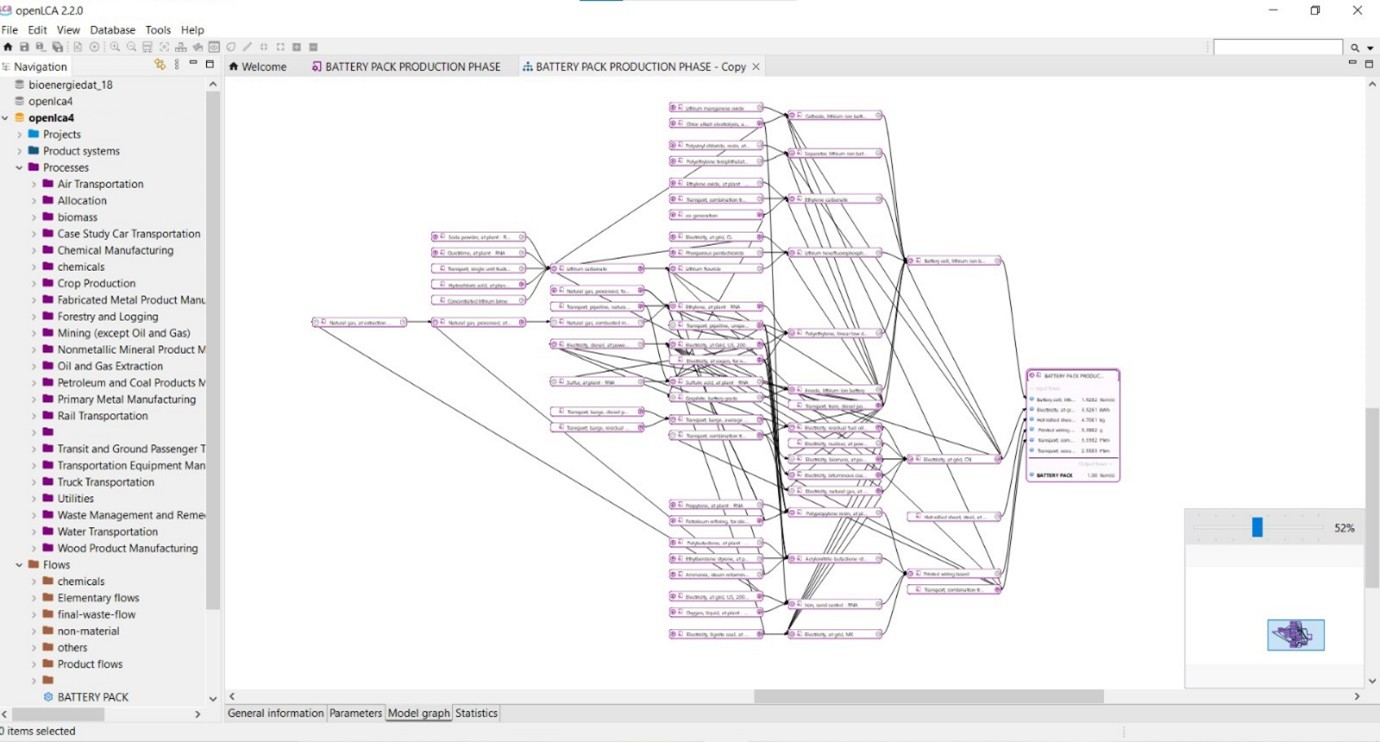
Once the inventory data is collected, the next step is to model the entire product life cycle in OpenLCA. Users can input the input-output data for each process related to production, usage, distribution, and disposal of the product. The software allows users to build complex process chains, including upstream (supplier) and downstream (distribution and usage) processes.
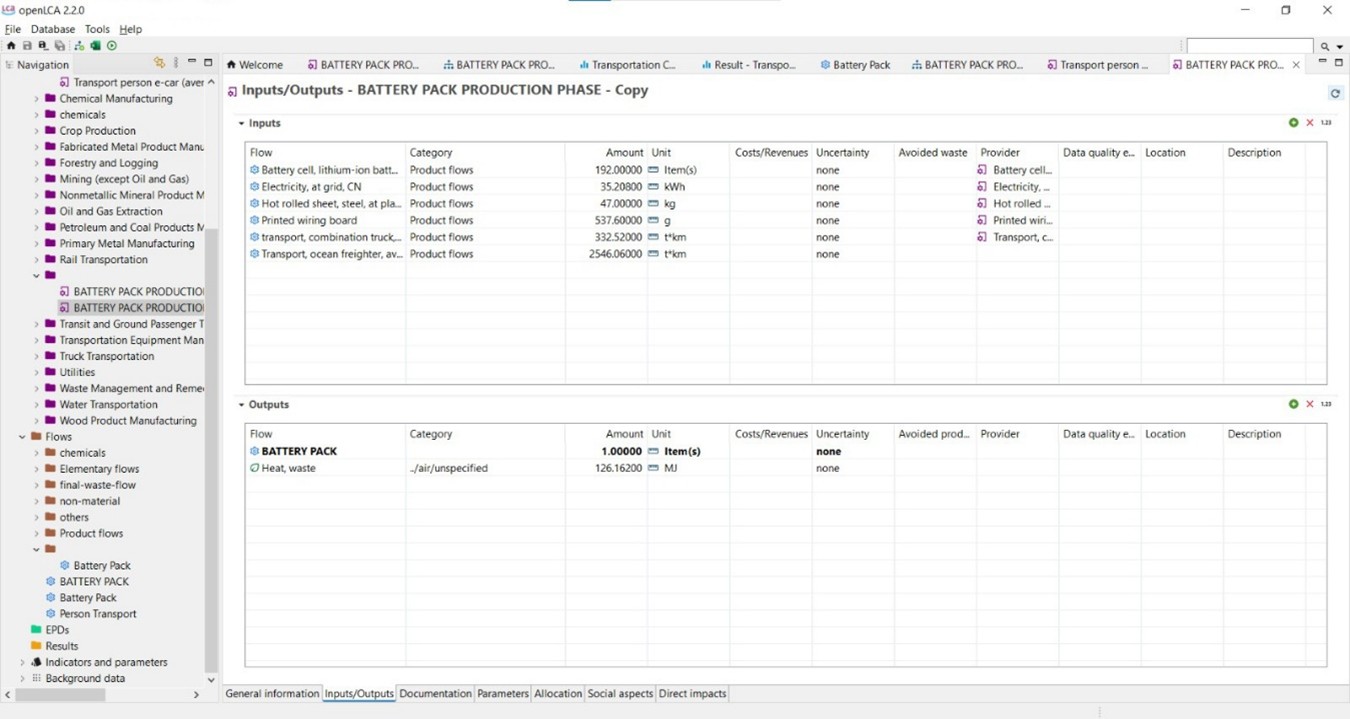
( Input/Output LCA data from goods production)
3. Selection of Databases and Impact Methods
OpenLCA allows users to select databases relevant to specific geographical conditions or industry sectors. We can provide a wide range of databases available within the OpenLCA Nexus. The available databases are as follows:
| No. | Database | Status |
| 1. | EN15804 add-on | Purchase |
| 2. | ecoinvent | Purchase |
| 3. | Circularity Package | Purchase |
| 4. | The Evah Pigments Database | Purchase |
| 5. | LCA Commons (complete) | Purchase |
| 6. | IDEMAT | Purchase |
| 7. | Carbon Minds | Purchase |
| 8. | PLEX | Purchase |
| 9. | UVEK LCI Data | Purchase |
| 10. | OzLCI2019 | Free |
| 11. | Environmental Footprints | Free |
| 12. | idea | Purchase |
| 13. | Agri-footprint | Purchase |
| 14. | exiobase | Free |
| 15. | ARVI | Free |
| 16. | Agribalyse | Free |
| 17. | Circularity Food Package | Purchase |
| 18. | soca | Purchase |
| 19. | EuGeos' 15804-IA | Purchase |
| 20. | NEEDS | Free |
| 21. | PSILCA | Purchase |
| 22. | ESU World Food | Purchase |
| 23. | ELCD | Free |
| 24. | LC-Inventories.ch | Purchase |
| 25. | Social Hotspots | Purchase |
| 26. | ProBas | Purchase |
| 27. | bioenergiedat | Free |
| 28. | worldsteel | Purchase |
| 29. | Ökobaudat | Purchase |
| 30. | LC-Impact LCIA Method | Purchase |
| 31. | IMPACT World+ LCIA Method | Free |
| 32. | openLCA LCIA methods | Free |
In addition, users can select the appropriate impact assessment method, such as CML, ReCiPe, or TRACI, which will be used to calculate the environmental impacts of the product. Each method has different calculation approaches for aspects such as global warming, eutrophication, or resource use.
4. Impact Calculation and Analysis
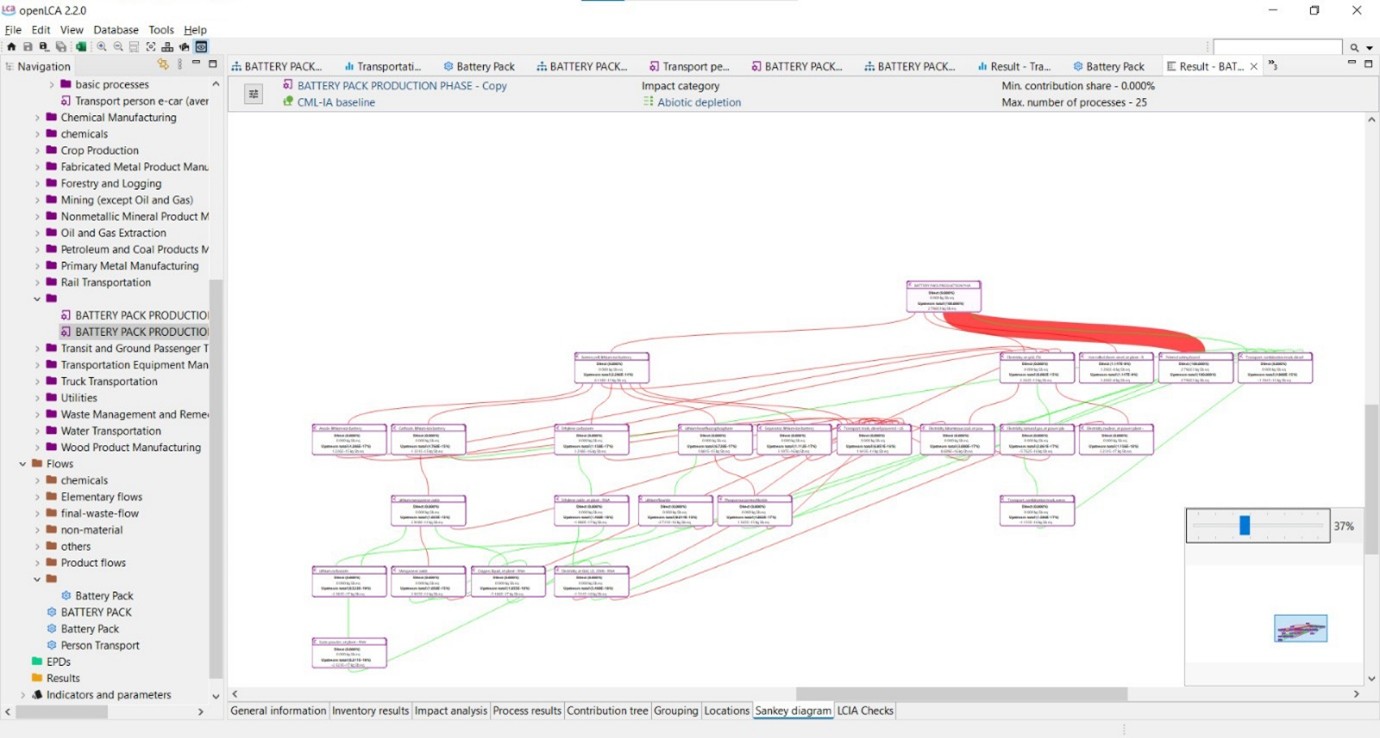
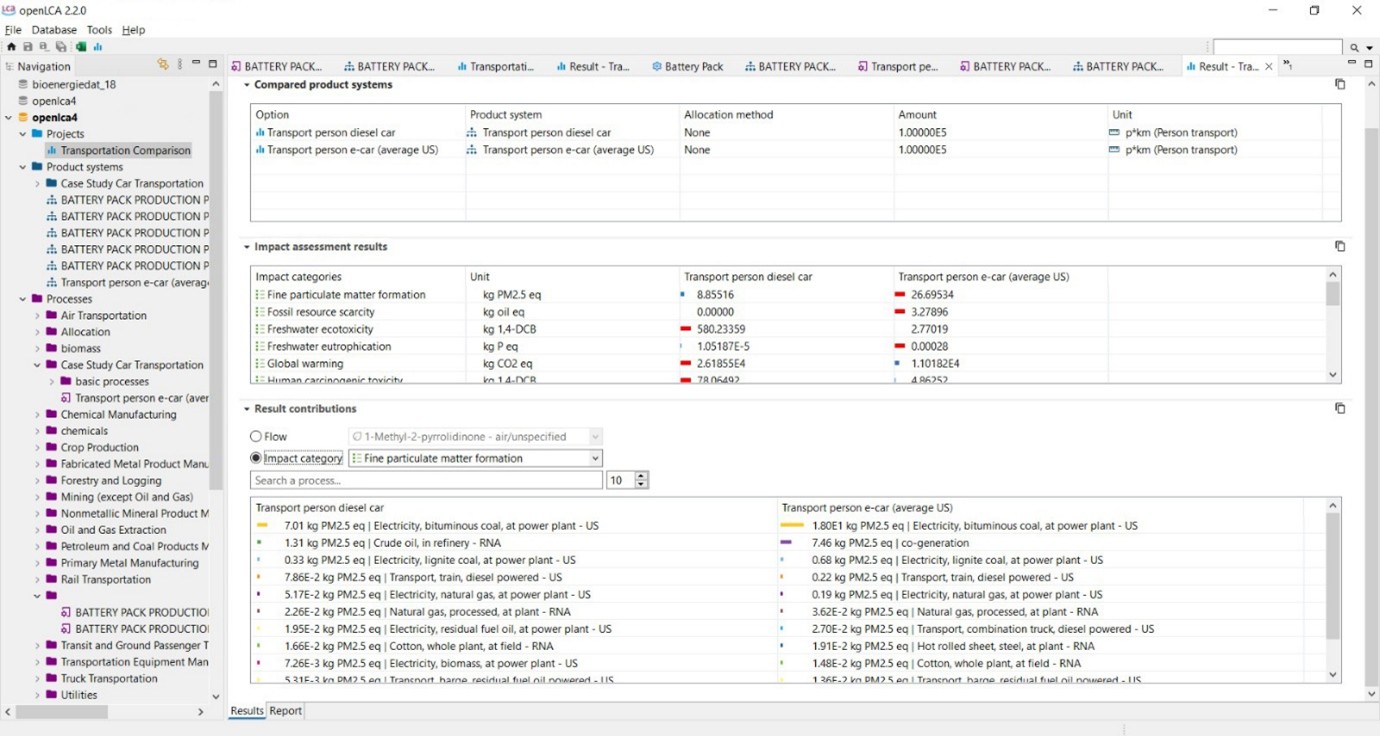
Once the modeling process is complete and the database and evaluation method have been selected, OpenLCA will calculate the environmental impacts based on the inputs provided. The software will
generate environmental impact data for the product across various categories, such as carbon footprint, water usage, and potential ecosystem damage.
5. Reporting and Interpretation of Results
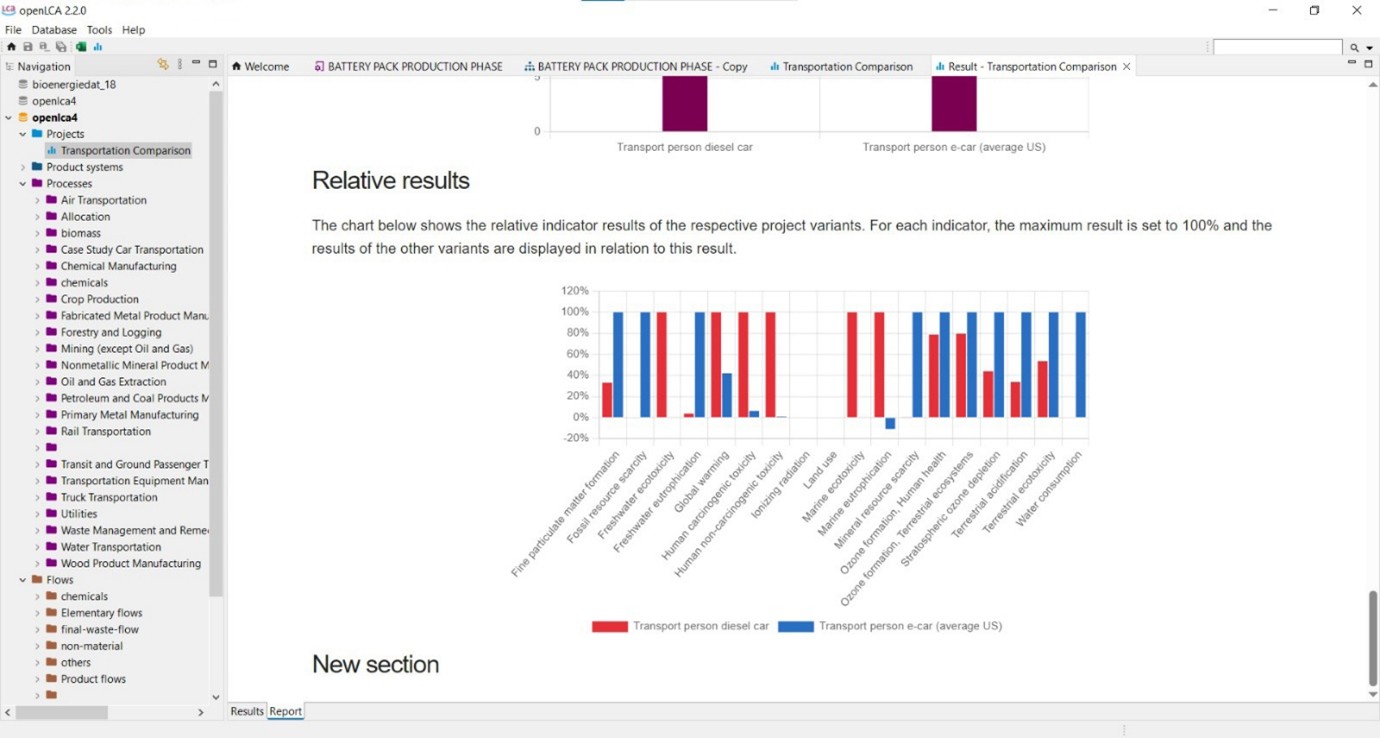
The final stage of this process is the presentation of the analysis results. OpenLCA allows users to generate detailed reports that include visualizations of the environmental impacts at each stage of the product’s life cycle. Users can also customize these reports to meet specific reporting standards, such as Environmental Product Declaration (EPD), or for the company’s internal purposes.
Why is Life Cycle Assessment Important?
At its core, LCA provides a comprehensive view of the environmental impact at every stage of production. This approach allows companies to identify areas where resources are being used inefficiently or where negative impacts can be reduced. For instance, in the manufacturing industry, LCA can help pinpoint energy-intensive production processes or those generating high emissions. With this information, companies can take steps to improve their business practices, reduce operational costs, and optimize resource usage.
Moreover, LCA provides a deep understanding of a product’s carbon footprint. As global attention to climate change and carbon emission reductions increases, companies are required to take proactive steps in minimizing their environmental impact. By adopting LCA, companies can identify concrete actions to lower carbon emissions, from raw material use to waste management, ultimately contributing to the company’s long-term sustainability.
Compliance with Regulations and Market Expectations
In addition to environmental benefits, LCA helps companies comply with increasingly stringent government regulations on sustainability. In many countries, including Indonesia, regulations on reducing greenhouse gas emissions and managing industrial waste are continually evolving. Companies that fail to demonstrate concrete efforts to minimize environmental impacts may face legal sanctions, loss of licenses, or damage to their reputation. Therefore, LCA is not just a tool for improving operations but also an essential instrument for maintaining long-term business sustainability.
On the other hand, today’s consumers are increasingly aware of the importance of environmentally friendly products. Reports show that consumers are more likely to choose products from companies that care about sustainability and demonstrate a genuine commitment to minimizing their environmental impact. LCA gives companies the ability to back their sustainability claims with concrete data, ultimately enhancing brand reputation, attracting more customers, and even enabling premium pricing for eco-friendly products.
Driving Innovation and Differentiation
LCA also plays a crucial role in driving innovation. By mapping out the entire product life cycle, companies can discover new ways to reduce waste, use energy more efficiently, or find alternative, more eco-friendly materials. Such innovations not only help companies cut costs but also create new, more competitive products in the market. In many cases, the adoption of LCA has sparked the development of innovative materials or cleaner manufacturing processes, giving companies a competitive edge in a market increasingly focused on sustainability.
Conclusion
Life Cycle Assessment is no longer just an option for companies but a necessity in a competitive and sustainability-driven business environment. With its ability to improve efficiency, reduce carbon emissions, and meet regulatory and market demands, LCA offers tangible benefits for companies across various sectors. More than that, LCA helps businesses thrive in the growing green economy, ensuring they remain relevant in a sustainable future.
BATS Consulting is ready to help you create added value for your company while supporting environmental preservation.
Contact us today to learn more about how our Life Cycle Assessment Services can make your business greener and more sustainable.